
We have always worried about our children’s exposure to new technology: Plato feared that poetry and drama would corrupt young minds, the advent of writing on paper was a concern to those who valued a good memory as a tool of learning, and novels were sure to see the end of civilisation as we knew it in the 1700s. But the concerns raised about our children and their ready access to modern technology cannot be laughed off as easily as Plato’s concerns. There are harms to children from being exposed to too much technology too early in life. Let us have a look at both sides of the equation.
Children instinctively seem to know what to do when faced with a device, even children who logically should not have this innate knowledge. A few years ago, children in a remote Indian village who would have had very little interaction with technology, were given some iPads to play with, with no instruction given by the researcher: he simply handed the devices to the children and say back to observe. To his amazement, all the children quickly worked out how to turn on the iPads, then navigate to a game within a few minutes. Within ten minutes of the children being given the devices, they were playing the game, having ascertained the rules of play through some unexplained osmosis. Even very young children today quickly learn how to press screens and push buttons – but this is not a sign of your child’s budding genius, being fairly universal.
Blue Light
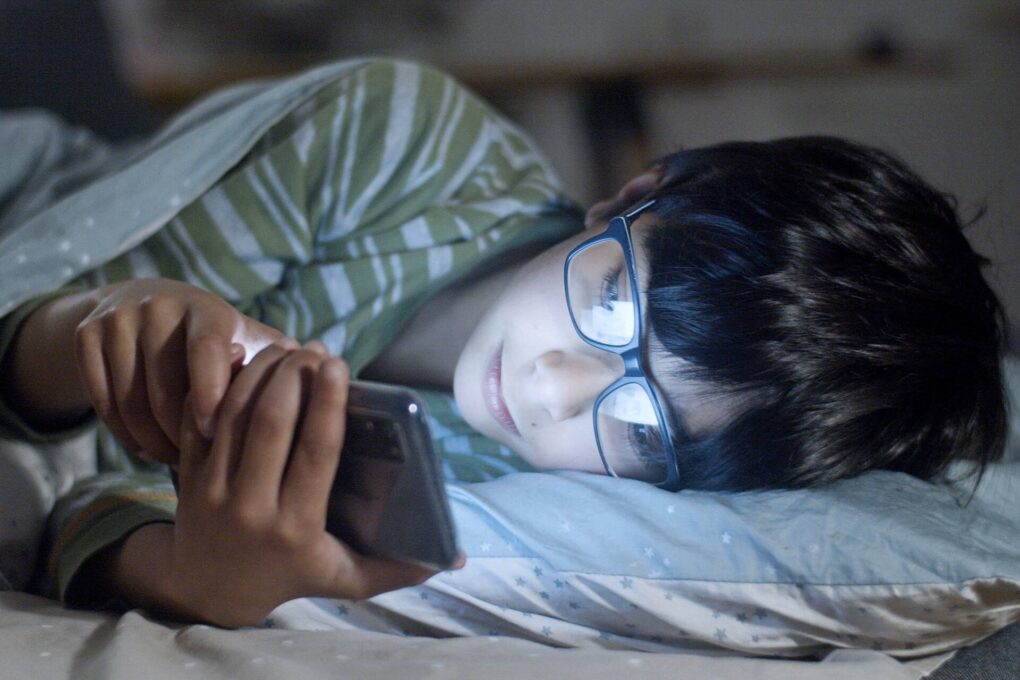
Blue light is part of the visible light spectrum and features shorter wavelengths and higher energy than other areas of the light spectrum. This light is also found in daylight and it helps to set and regulate our circadian rhythms – the instincts that have us waking up in the morning and going to bed at night amongst other things. Too much exposure to blue light emitted by devices can interfere with your sleep schedule – and this is especially egregious for children who need more sleep than adults and whose circadian rhythms are not as well established as yet.
Depressive Tendencies
There is a fine line between too much screen time and too little. Children who have a lot of screen time (especially the ‘passive’ screen time as described below) tend to show more signs of depression and have more depressive tendencies than their peers who have more tightly regulated screen time – but, oddly, no screen time at all has been found to be equally problematic!
Not All Screentime is Equal
Video chats with family members and friends almost doesn’t count as screen time as the child can respond to their grandparent or aunt, who will use a variety of facial expressions, vary their tone of voice, and generally encourage critical thinking and the use of verbal skills. Child-based television programs and other content are not terrible either. They tend to be fairly short and use engaging content to attract and keep the child’s attention on the storyline or lesson that is playing out, and often they require a response, albeit with the answers being unheard by the presenter. Passive watching – simply watching a video play out with no input required from the child is probably the worst form of media consumption, especially for the youngest viewers (more about this below).
Time Screentime
With young children make sure you monitor their screen time and set hard and fast rules about when screens can be used. No screens in the morning before work and school is a good idea, and once you return home, homework and chores should be completed before any screen time is granted. Then, once the time is up, it should be dinnertime, bath time, and some form of screen-free relaxing before bed so that at least one and preferably two hours have passed after screens have gone off before bed.
What To Do
Age Makes a Difference
Until the age of three, your child does not need any screen time. While babies as young as six months will watch a screen with seeming attention, it is believed that they do not really learn from screens until about the age of 2.5. But their brains are so young and malleable at this stage that any screen time at all can affect their learning and development, so hold off for as long as you can. If you have concerns about your child’s development check out www.educator.co.uk for milestones and more. Between the age of 3 to 5 years old, they can be allowed up to one hour of high-quality children’s screening daily. 6 to 12-year-olds can be allowed more graduated screen time depending on their wants and your concerns; while 12-year-olds and up can maintain their own devices, but with designated screen-free times – such as meals, and meeting up with friends or relatives.
Disclosure: collaborative post
Thank you for reading - if you enjoyed this content, please consider buying me a coffee here or browse my Amazon wishlist I really appreciate your support and it helps to keep the site running and for my time 🙂