


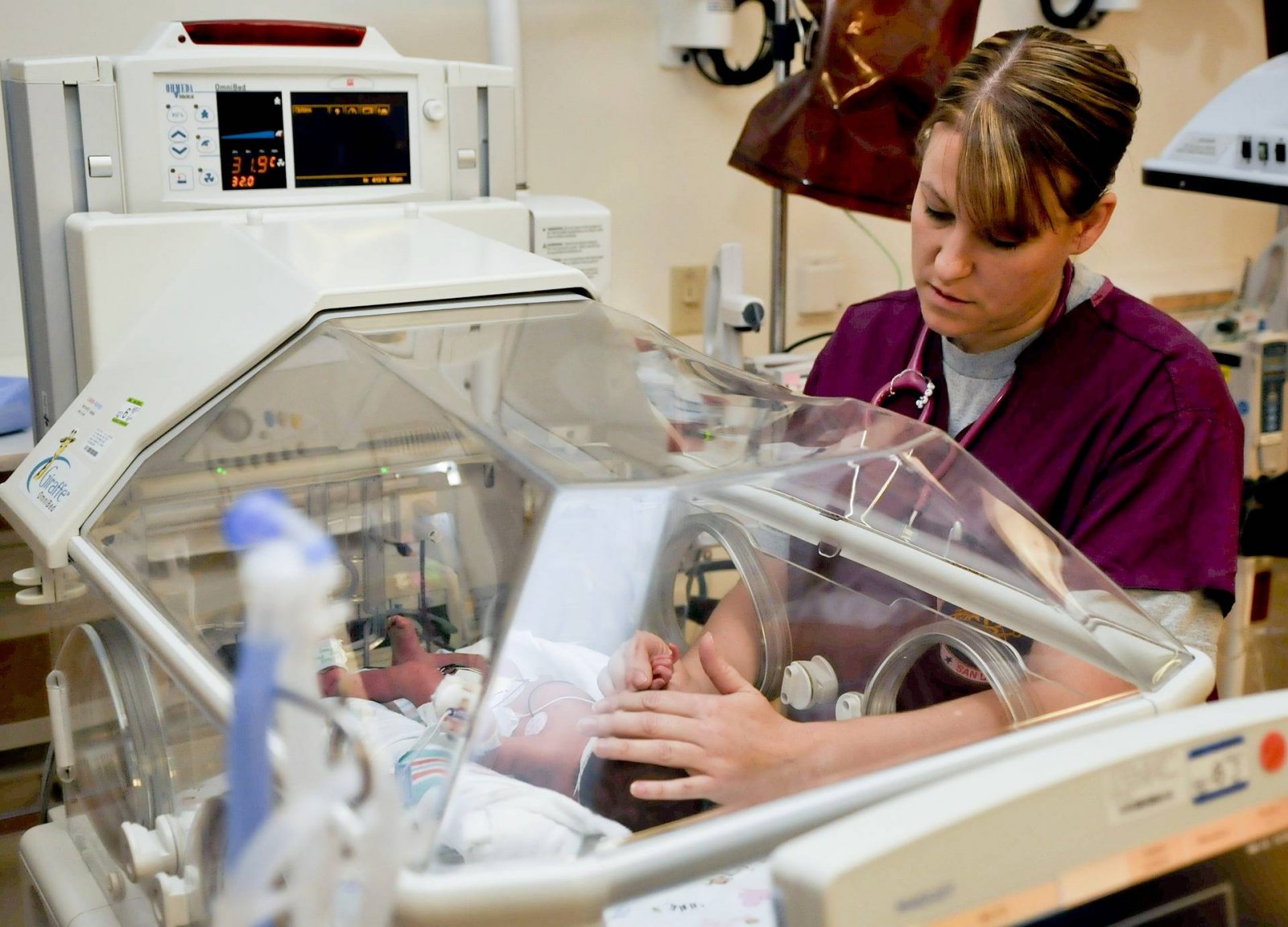
So much of how a nurse behaves in their career is shaped while they’re still a student. It’s at this stage that they not only learn the technical aspects of their profession, but also see true patient care modeled from established professionals.
In the clinical setting, nursing students are put in hectic hospital environments. They work very directly with doctors and nurses experiencing some of the real-world pressures of their profession.
In this article, we examine how this environment facilitates compassion and expertise.
Overview. What are Clinical Rotations?
Clinical rotations are a required element of any nursing education program in the United States. Nursing students spend up to several full days a week working side-by-side with licensed nurses and doctors.
Not only does this help them get lots and lots of reps in, but it also solidifies concepts that they previously only learned about in books.
Many nursing students also develop personal connections with the RNs they are working under.
These mentorship relationships can and often do shape the way aspiring nurses view their role and responsibility within the healthcare system.
It’s through these pairings that nursing students are able to not only see how the job is done, but ask questions and receive personalized guidance. That can have a very direct impact on patient care.
Concept mastery is, of course, important, but in many ways it’s also the most generic component of what it takes to be a nurse.
You can find this information in any medical textbook, and while it is complicated, it’s also learnable. Patient care is more complex and varied.
It involves the application of healthcare concepts, but it also requires empathy, discretion, active listening, qualities that are often only honed through firsthand experience.
How Nursing Students Can Maximize the Impact of Their Clinical Experience
College can very easily and often inadvertently become a process that students sleepwalk through. That’s not to say that they don’t try hard.
Nursing students certainly have that going for them. It’s more that many college kids don’t fully understand how to take advantage of the opportunities they’re given and truly make their experiences work for them.
The average nursing student understands that they have to do clinical rotations. They do them, and they try their very hardest to do them well. That’s great, but it’s not necessarily the most active way to tackle the process.
If you are a nursing student who wants to maximize your experience with clinical rotations, here are a few things you can do:
- Ask lots of questions. Nursing can be extremely hectic at times. It can also be slow if there’s a break in the action. Use that as an opportunity to ask questions of the RNs that you’ve been paired with. Chances are very high that they’ll be more than happy to answer any inquiries you might have. It’s a great way to gain perspective beyond what you can learn in books.
- Don’t shy from responsibility. Overwhelming though clinical rotations might be, they’re a great way to try new things in a controlled environment. Take on as much responsibility within your rotation as possible. Ask what you can do to help. Try to step outside your comfort zone. The nurses and doctors around you understand how to set boundaries. They’ll support you in situations where it’s appropriate, sideline you when they need to, and provide feedback afterward. All of those things can be intimidating. They’re also very helpful.
- Take advantage. Seek additional opportunities when you can. It’s also important to understand that clinical rotations are a minimum requirement, but not necessarily the maximum extent of your exposure to work-to-hand experience. There may be additional volunteering opportunities, extra placements you can take, career shadowing spots, or even mentorship programs that will be worth taking advantage of.
You’re paying a lot for your nursing education. Get as much from it as is humanly possible. You’re only a student once. This is a great time to embrace the opportunities in front of you.
Clinical Environments Provide Nurses with a Safe Space
None of the things we’ve described to this point are comfortable or easy. They’re still safe. That’s the key benefit for nursing students.
If you are truly interested in a career centered around healthcare, what you do now matters immensely. It’s not just about what you learn in the classroom or even what you experience firsthand in the clinical setting. The relationships that you make, the conversations you have, and the questions that are asked and answered will all play an important role in the nurse that you eventually become.
A lot of what you’ll be asked to do is difficult. That’s not to say that it’s beyond you. This is the perfect time and place to experience a little bit of professional discomfort.
The guardrails are up. Your support system is in place. Take full advantage.
Disclosure: collaborative post
Thank you for reading - if you enjoyed this content, please consider buying me a coffee here or browse my Amazon wishlist I really appreciate your support and it helps to keep the site running and for my time 🙂