


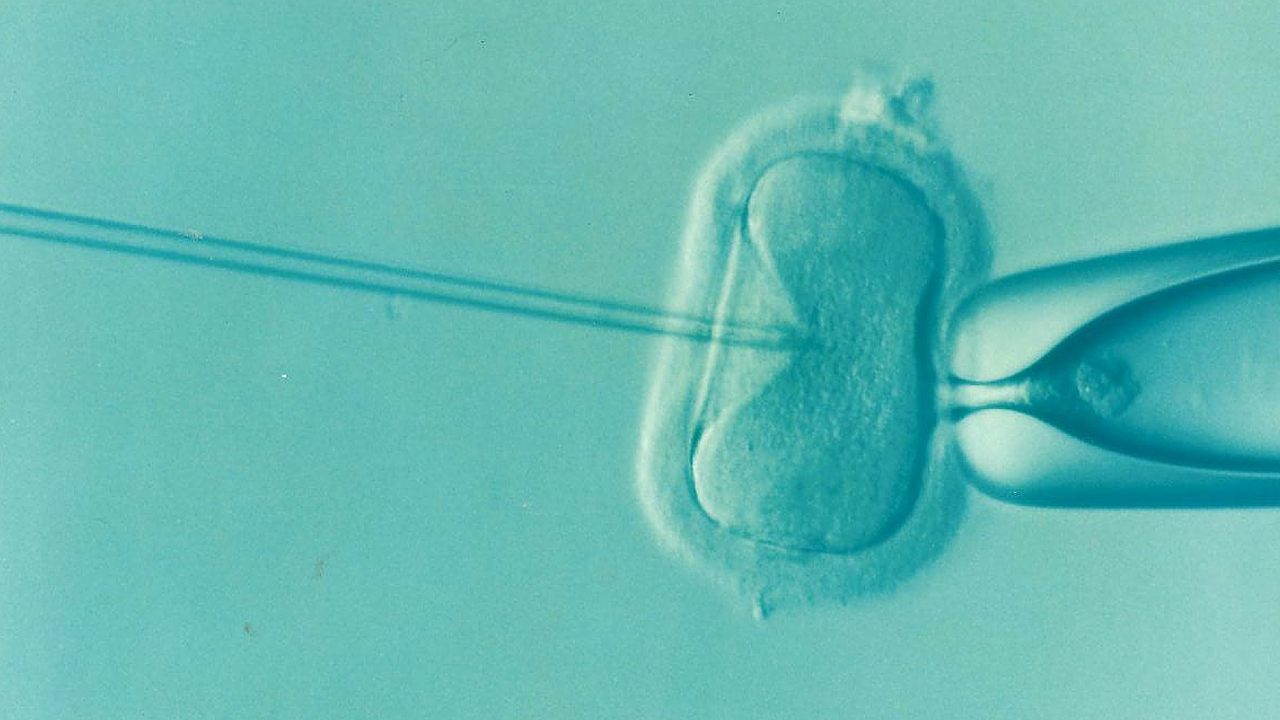
My IVF journey is slightly different to most people, but it is by no means unique. My husband and I don’t actually have any fertility issues per se, but we are both carriers of a genetic condition called Tay Sachs Disease. This means that for every baby we conceive, we have a one in four chance of that baby being affected with the disease, two in four of them being a carrier and a one in four of them being unaffected. Our first child was affected and we had no idea until she started showing signs of slowed and delayed development.
So, even though we both have no fertility problems or issues, here we were about to embark on a course of IVF, our only shot at it unless we found £7000 to spare. Fertility costs can vary, but that was what the IVF cycle with PGD cost back in 2009. It may be different now. We had funding from the local authority for one cycle. If it is something you are considering, check your local clinics for IVF pricing lists.
What is PGD IVF?
PGD (Preimplantation Genetic Diagnosis) IVF is an advanced fertility treatment that combines in vitro fertilisation (IVF) with genetic testing. This process is used to screen embryos for specific genetic conditions before they are implanted into the uterus. PGD can help prevent certain genetic disorders from being passed on to children, making it an essential option for couples at risk of inherited conditions.
During a typical IVF cycle, eggs are retrieved and fertilised with sperm in a laboratory. With PGD IVF, after the embryos are created, a few cells are taken from each embryo and tested for genetic disorders. The embryos that are free of the specific condition(s) being tested for are then selected for implantation. This allows for the transfer of embryos with a lower risk of genetic diseases, increasing the chances of a healthy pregnancy and birth.
The first stage was to down-regulate my hormones so they could take control of my cycle by injecting a hormone every day at the same time for 4 weeks. It was a small injection into the subcutaneous (fat) layer, so I injected it into my stomach. It wasn’t very painful, a mild discomfort but it’s hard psychologically to inject yourself and inflict pain on yourself. I had to psyche myself up each time but it got easier. Then we had to travel up for a scan – it was a 3-4 hour drive each way which was tough. The goal this time was that the ovaries would be quiet and the womb lining thin. Success!
The first hurdle was done, so the next step was to start injecting a different drug. I had to mix it up by rehydrating the drug and then injecting it as before daily. I’m glad I have medical training, I imagine it would be daunting to those without. This time I needed to go up every 3 days for a scan to check how my ovaries were responding and they could adjust the dose as necessary. I felt better about this part because the downregulating part seemed to be going against what we were trying to achieve. I hadn’t noticed any particular mood changes, well no more than usual! For me, it was just stressful getting to each stage and nerve wracking thinking what could go wrong or not work. The scans and injections continued over a two week period, my body seemed to be responding well and it was a case of waiting until they were almost ripe.
It was very exciting when they said it was time, and I was to do a one-off HCG trigger injection at an exact time so that they then timed the egg collection exactly 48 hours later. I then started inserting 2 progesterone pessaries (high into my vagina) morning and night, and then tried to lie down for 20 minutes after insertion. They had then done their stuff but you get a nice pasty discharge coming out over the course of the day. We decided to go up and stay in a hotel the night before so we didn’t have an early morning dash and didn’t have to worry about traffic delays. With timing being so crucial it made sense. The night before egg collection I felt a bit bloated and in the morning struggled to do up my trousers, I didn’t know this could happen. I was a bit apprehensive as I’d watched a lot of documentaries about fertility treatment and the egg collection always seemed a bit painful. Oh, and my husband? Through it all, he had nothing to do, but that was his big day. As I was going in for the egg collection, he got to go into a room and provide his specimen – I think he got a better deal, but I imagine there was a fair amount of pressure. I think he had to abstain for at least 48 hours if I remember rightly. He had no problem producing a sample.
The Egg Collection Process of IVF
I had to change into a gown, I think I had to be starved from the night before. I had a cannula put in my hand and was prepped for theatre. Once in the theatre, I was given midazolam, a sedative. I thought I would rather be put to sleep, but I remember them injecting me with it, the next thing I remember they’re telling me to wake up and I’m back in the cubicle, all done! I sat up and felt a little woozy, they were asking if I was ok, in any pain – apparently I was thrashing around and distressed when I had it done but I remember absolutely nothing! Just as if I’d been asleep. The first question I asked when I regained consciousness (and I think everyone who has this does too) was ‘How many eggs did I get?’ 14 was the answer, I was pleased with that.
The next stage is really hard because you have no control over it. They work out which eggs are mature, this left us with 7 eggs, and then they inject each one with a healthy looking sperm. There are different types of IVF, there’s In Vitro Fertilisation where many sperm are put with the egg and its left to fertilise, and then there’s ICSI (Intra Cytoplasmic Sperm Injection) where a single sperm is injected. That’s the type I had.
The next day, they phoned and said that out of the 7, they had all fertilised! Exciting, we needed more than most because we knew one or more would be affected with Tay-Sachs, as we have a 1 in 4 chance each time of an embryo (child) being affected with the disease. On day 3 they would extract a cell from each one, test the individual cell genetically and only replace those unaffected. I just prayed that we’d get at least one.
I worried about my little embryos in the warming cabinet, I worried about them when they had their cell removed, didn’t they need that one? Apparently we all start as a bundle of stem cells before we even implant in the womb and we won’t miss one. They did their tests and we waited another 2 days for the results. It turns out we had two that were healthy embryos – yay! 2 were affected and one didn’t get any further in development. We had the option to put back just one and freeze the other, or put back two. I was so desperate to get pregnant from this and for it to work out, that I decided to put two back. If we got twins, all the better.
The embryo transfer process
This was very simple, probably the simplest part of the whole thing, but possibly the most momentous! They showed us our embryos on a monitor, they’d broken out of their shells ready to grab on, which was an amazing sight. Because you have to wait longer for the results with PGD, the embryos are at the blastocyst stage when they are transferred. I was just desperate to have them inside me and to look after them outside of the lab. They put them inside a long thin tube, I laid with my legs in stirrups and then they popped them in. It didn’t hurt at all, I think because I’d already had a child my cervix wasn’t fully closed so it wasn’t an issue. You have to have a full bladder for the transfer, then you get to lie down for a bit. You feel like you never want to stand up in case they fall out! But I was assured they wouldn’t. Then they make you go to the toilet, I was worried I’d just flushed them away but apparently they stick in there.
Whilst I was in the waiting area before I got up for the toilet I felt a little cramping sensation, very subtle, but I was convinced that was them burrowing in. Positive thinking and all that! Then we drove home and all we could do was wait 2 weeks to do a pregnancy test. They told me to phone later than that, I think it was 16 or 17 days, but having done several pregnancy tests before I knew the result may show earlier than that. I still had to continue with my progesterone pessaries.
The two-week wait
If you’ve ever tried for a baby you may be familiar with this terminology, you wait for ovulation, then you have a two-week wait. On the drive home I kept my feet up on the dashboard (I wasn’t driving) and then when I got home I put a hot water bottle on my tummy to give them a nice warm environment. I was still looking after my sick child and continued to work, although I had annual leave that first week. I was told to abstain from sex and not to go to the gym. Probably best not to operate heavy machinery either. I had the embryo transfer on a Friday, then on Monday, I’d had a decent breakfast and had just put the pessaries in, I was lying down and my carer for Amy was there and we were laughing about me lying down on the floor as Amy took up the sofa, when I was hit by a sudden ravenousness – I literally was starving, having just eaten – it was a familiar feeling, only much stronger, to when I was pregnant with Amy. Surely it was too soon to be having symptoms already? I waited a bit and then ate something, but didn’t tell anyone. I told my husband when he got home and in his pessimistic stoic way he told me not to get excited.
Over the course of the next week, my symptoms got stronger, I was constantly hungry and I swear my stomach was growing. I began to suspect they’d both taken. I waited a few more days and then caved in and got a pregnancy test. I wasn’t supposed to test for another week at least but I wanted to know if I was going mad – I did it on my own during the day in secret – a faint line appeared! I was pregnant, it had worked! Now I wished I hadn’t tested, because I couldn’t tell anyone! My stomach was definitely swelling, and my husband knew from my sudden outbursts that I was pregnant. When it was officially test day, I took out the official test they’d given me and it was like it was a formality – yes I was indeed pregnant! I had to phone the clinic and tell them, they gave me the usual advice about what foods to avoid and health advice, told me to book with my midwife, and made me an early scan appointment, which was to be in 4 weeks time which felt like an eternity.
As we’d told close friends and family what we were doing, we told them the result. It seemed like forever before the scan, I wanted to wait until we’d had it before booking with the midwife, as I was only too aware of what could go wrong. I was also trying to decide whether to have extra testing to double-check the PGD results. Would I risk this pregnancy by having a CVS (chorionic villus sampling, like an amnio) or trust the results? As there was a tiny risk of misdiagnosis, I felt with the severity of the disease, I’d sleep better if I did confirm with diagnostic testing, which is more definitive than with single-cell testing. The scan day arrived, and I was so nervous, they did an internal scan. I could hardly look at the screen – and there they were, two heartbeats, two embryos that had made it to teeny tiny 8-week-old foetuses! Amazing and we felt so blessed, we went for a pub lunch to celebrate and phoned our parents. I sort of knew it would be twins, I was just hoping they were ok, my stomach had grown already and I was feeling super hungry (and sick) too. Another hurdle down.
With twins on board, it made things more complicated with diagnostic testing, they couldn’t do the early test at 12 weeks (the CVS), so I had to wait until after 16 weeks to have a double amniocentesis. They were two separate embryos so they were what’s known as Dichorionic, Diamniotic or DCDA twins (two sacs, two placentas), so performing the test should be straightforward. It was a long wait to have the test, I struggled with nausea and got a terrible cough that left me wetting myself all the time! If you’ve been pregnant you’ll know what it’s like! By this time Amy was deteriorating, but she was stable, we booked her in for a respite week at Demelza house and went on a boating holiday for a few days, I put a brave face on but I felt pretty rough, I was so worried, I couldn’t really relax and enjoy the pregnancy until we’d had the all clear from the Amnio, plus I was coughing my guts up, particularly at night and every time I thought my waters were going to break.


After our little getaway it was time for the appointment. I knew there was a risk of me losing both babies but I felt I had to take the risk. They scanned me and confirmed the position of the babies, I was feeling them both move. They don’t use a local anaesthetic like they do with a CVS, as they say it’s such a narrow needle – well, it’s a bit like being skewered with a barbecue stick – both sides! They did each one in turn, it wasn’t too painful, just a really weird and uncomfortable pressure, not something I’d like to repeat in a hurry. They withdrew some fluid from around each baby. We were desperate to know the sex of the babies, but they wouldn’t tell us, or rather they said it was too early. We thought we saw something on the scan that could be a boy baby but we weren’t sure. Afterwards, I rested and was told they should have results for us in a week.
Sadly, one of the babies was confirmed affected and after having one child already suffering with a short life span we decided to terminate the affected baby at 32 weeks. This caused me to go into pre-term labour with the other baby a few days later. I gave birth to the stillborn and then had a healthy baby boy, who is now 15 and taller than me.
If you would like to read the full story of Amy and my struggle for a healthy family, you can read my book The Gift I Couldn’t Keep here.
Thank you for reading - if you enjoyed this content, please consider buying me a coffee here or browse my Amazon wishlist I really appreciate your support and it helps to keep the site running and for my time 🙂