

When people think about stress, they often think about their jobs. Our careers are the parts of our lives that we’re more likely to associate with stress, and home always seems to be the retreat from all of that. So it would seem logical to call our homes the oasis in the middle of a bunch of things that cause a heck of a lot of stress; work, commuting, strangers, shops, etc.
But this isn’t necessarily the case for a lot of people. In fact, home may be where much of the stress in your life is originating.
If you consider the average workplace, you’re not exactly imagining a place where you’d prefer to spend the bulk of your time. There’s no doubt that they’re hotbeds of stress; most workers seem to be pretty unsatisfied with their jobs, which certainly doesn’t help matters. But take the time to consider the fact that the routine and a clear set of tasks that generally come with the workplace are often inimical to stress. They may not be very exciting, but at least, most of the time, you know what you’re doing. Cleaning tasks are generally taken care of by others, and you’re earning money as you work.
There’s much less ‘clarity’ when it comes to the average time one spends at home. But because you’re focussed on relaxing when you get home from work, people tend to allow stressful elements of their home build up. Over time, your home can become a hotbed of stress and dissatisfaction just like we often view the office to be!
So we’re going to take a quick look at some of the reasons people’s homes end up turning against them and stressing them out when they should be relaxing.

Image source: Flickr
Too much clutter
Clutter is quite common in most homes, even if it’s only temporary. A lot of people see it as part and parcel of having a home, but allowing pointless possessions to build up in your home really isn’t doing a lot of good for your mindset. When there’s clutter, there’s a strong sense of chaos and disorder, which will raise your stress levels. So remember to take the time to keep things neat and declutter your home, even if it’s just a few minutes at a time. And consider having a proper declutter; BecomingMinimalist.com has some good advice on sorting through your possessions and doing away with the things you really don’t need anymore. Plumbworld.co.uk has also more tips on organising the bathroom
Screens everywhere
For many people, television, mobile phones, and computers provide a much-needed break from reality. But sitting there and switching your brain off in front of a bunch of screens really doesn’t do a lot for your stress levels. A lot of people end up feeling like they’ve wasted a bunch of time that they could have spent doing something more challenging or productive. Using these things at night can also exacerbate stress because they place your brain into a mild state of hyperactivity despite providing no energy for your body; this ends up messing with the quality of your sleep. Consider reading a book instead – you’ll find it much more beneficial!
Work never ends
Some clearly see the home as a place that can be as stressful as the office, and the reason they see this so clearly is that they’re bringing work from the office to their home! Of course, this isn’t something that everyone can avoid all that easily. Sometimes, your job does call for you to put in a little time when you’re at home, and maybe you even enjoy it from time to time. But it can be easy to go overboard in this regard. You don’t want your work life and your home life to blur into each other that much; your stress levels simply won’t be helped if you do this too often. Of course, if you work from home, then this is a little different. PsychologyToday.com has a good article for those who work from home and need some destressing advice.
Temperature woes
The temperature of your home has a bigger impact on your stress levels than you may think; though, to many people, this may seem pretty obvious! The problem is that a lot of people underestimate the point of discomfort with the temperature at which your stress levels start to increase. For example, if your home drops below 18°C (that’s about 47°F to those poor souls who live in countries that don’t use the metric system!), then you’re going to be affected by the cold even if it’s not icy. OnlyRadiators.co.uk has more information about the importance of heating. But people underestimate heat even more than cold; it’s much easier for your body to become less alert, sluggish, and stressed in hot situations. Make sure you keep windows open and consider getting an air conditioning system.
Suffocating design
The design of your home can have a huge impact on your stress levels! Basically, the look you should try to achieve in your home is calm and clean. A lot of people may love decor that is loud and extremely colourful, but this is unlikely to help you when it comes to relaxation. Colour schemes in your room that are based on white, yellow, cream, gold, turquoise, and the like are more likely to ease your stress levels. You can read more about strategic colour schemes over at HGTV.com. The arrangement of your decorations and furniture can also have a huge impact. Make sure things aren’t too cramped; this will simply make everything feel cluttered and loud even if you’ve cleaned things up and are using calming colours!
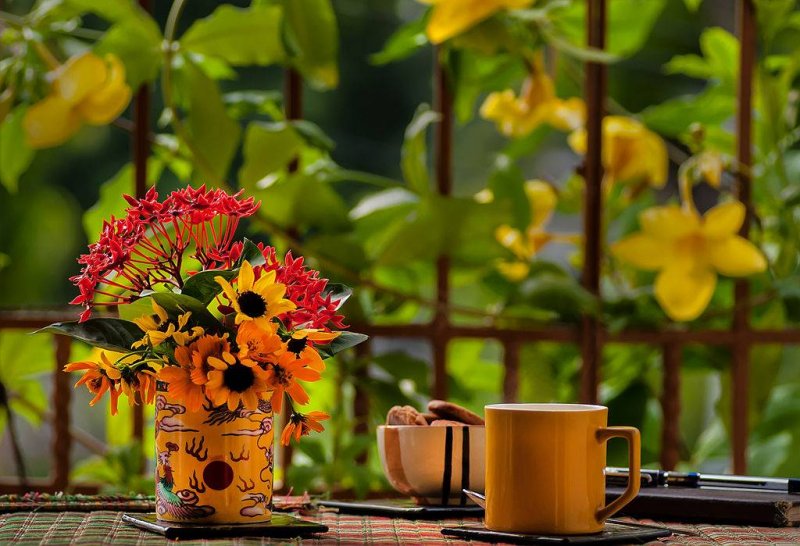
By Sarmistha Bera (Own work) [CC BY-SA 4.0 (http://creativecommons.org/licenses/by-sa/4.0)], via Wikimedia Commons
Too many people
Families: we love ‘em. But let’s face it: when you don’t get enough ‘me time’, your stress levels can increase tremendously. Of course, spending all your time by yourself really doesn’t tend to do much good for your stress or happiness levels, which is what can make family so great. But don’t forget to try to spend a little time to yourself every so often. We have an article right here that will help you get some quality time for yourself. It can be one of the most effective ways of reducing your stress levels. And when you’re less stressed, that simply makes family time so much easier to enjoy to the fullest.
A bad mattress
In an effort to save money – and in ignorance of just how important a quality mattress is – people often go for the cheapest mattress they can get. As long as they didn’t want to immediately jump off of the thing after lying down on it for half a minute or so, then people will generally pick up ultra-affordable spring mattresses. The problem with this is that it really ruins your quality of sleep, and can even cause back pains and other problems after long-term use. WebMD.com has some advice for picking out a mattress that will work best for you. You’re going to have this mattress for about seven years or so; while a really great mattress can be quite expensive, just remember that it’s a wise and long-lasting investment.
Being at home too much
At the end of the day, being cooped up at home for too long can really start to get to you, even if you’re spending all that time with your beloved family. It results in a lack of exercise, and exercise is one of the best stress killers around. It means you don’t see much green space, which is great at tackling mood problems. Don’t be a couch potato, and don’t spend all your time worrying about how to make your home better. Get outside! See some friends! Go for a walk or a run! Go cycling! Go read a book in a nearby park! Just get out there and you’ll feel much less stressed.
Disclosure: collaborative post
Thank you for reading - if you enjoyed this content, please consider buying me a coffee here or browse my Amazon wishlist I really appreciate your support and it helps to keep the site running and for my time 🙂