

Table of Contents
- Why Skyline Itineraries Work
- Choose Your Main View
- Plan by Neighborhood
- Build a Realistic Day
- Use Light and Weather
- Add Free Viewpoints
- Make Transportation Easier
- Sample Skyline Itinerary
- Tips for Families and Groups
- Common Planning Questions
A skyline-focused day in New York City, New York, can be more satisfying than a race between famous addresses. Instead of trying to see every landmark, build your route around changing perspectives: a street-level look at Art Deco towers, a waterfront view across the river, a bridge walk, and one memorable high-altitude stop. This approach gives the city room to reveal itself between planned moments.
For many first-time visitors, the Empire State Building is a natural anchor because it places them in the heart of Midtown near restaurants, transit, and walkable streets. Before choosing a time, check https://www.esbnyc.com/ for current hours, ticket options, and timed-entry details, then shape the rest of the day around that reservation.
Why Skyline Itineraries Work
New York’s skyline cannot be experienced from one place alone. Parks, ferry terminals, river walks, avenues, and public plazas each frame the city differently. A skyline itinerary also creates a calmer rhythm: one major attraction gives the day purpose, while nearby walks and food stops prevent it from feeling like a queue-to-queue checklist. Leave space for security lines, weather shifts, restroom breaks, and the occasional block that deserves a slower look.
Choose Your Main View
Select a central viewpoint according to the experience you want, not simply the tallest option available.
- Classic skyline view: Choose a central observation deck for landmark recognition and broad city orientation.
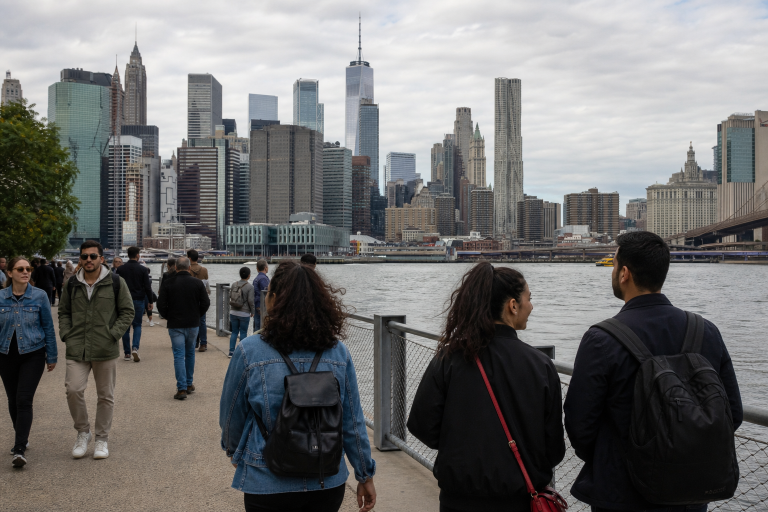
- Waterfront view: Prioritize open sky, bridges, harbor traffic, and the contrast between Manhattan and the surrounding boroughs.
- Sunset view: Make this the day’s main reservation, then keep earlier stops flexible.
- Night view: Pair illuminated buildings with dinner, theater, or an evening walk.
- Architecture-focused view: Spend more time at street level, where facades, lobbies, setbacks, and changing building materials are easier to appreciate.
A paid observation point works best when you want a structured, elevated experience. Choose a public park for flexibility, a bridge for movement and changing angles, or a ferry ride when the journey itself is part of the view.
Plan by Neighborhood
Grouping stops by area protects time and energy. In Midtown, pair a major viewpoint with Bryant Park, Fifth Avenue, the Garment District, or a theater district stroll. Lower Manhattan works well for harbor scenery, civic architecture, museums, and Battery-area paths. The Brooklyn waterfront combines bridge views, parks, and neighborhood dining, while the West Side can connect elevated green space, modern development, markets, and Hudson River views. Queens and New Jersey also offer wide-angle perspectives back toward Manhattan, especially when the goal is to photograph the whole skyline rather than stand inside it.
Build a Realistic Day
Most visitors will have a better experience with two or three major stops than with a packed list. Use this simple formula:
- Choose one paid attraction or timed experience.
- Add one substantial walk in the same general area.
- Schedule a real meal close to the next stop.
- Keep at least one unscheduled hour for photos, lines, or a spontaneous detour.
- Finish near a subway station, ferry terminal, or dinner reservation.
This structure turns transit into a connector rather than the main event. It also gives you time to notice the smaller details that make New York memorable, from a lobby ceiling to the way late-day light catches a tower.
Use Light and Weather to Your Advantage
Morning can be a smart time for outdoor photos and quieter walking routes. Save midday for museums, markets, cafés, or shaded streets, then reserve late afternoon for longer shadows and warmer-looking light. If a clear forecast aligns with your main view, sunset can be a strong finale. Open decks, bridges, and waterfront paths can feel noticeably windier or cooler than nearby streets, so carry a light layer and check conditions on the day itself. For rain or low visibility, shift toward indoor exhibits, historic interiors, and a shorter outdoor finish if the clouds lift.
Add Free Viewpoints
A memorable skyline day does not require multiple admission tickets. Mix your anchor attraction with public parks, riverfront promenades, bridge approaches, pedestrian paths, and side streets that offer unexpected sightlines between buildings. Free viewpoints add variety and help control costs, especially for families or groups with different priorities. They also offer a useful backup when a timed visit ends earlier or later than expected.
Make Transportation Easier
Before leaving your hotel, use the New York City Subway map to compare stations and transfers near your planned walking route. Begin in one neighborhood and move generally in one direction rather than repeatedly crossing Manhattan. Allow extra time for station exits, crowded platforms, street crossings, and elevators when needed. Ferries are most worthwhile when the water view is part of the experience, not merely a substitute for a faster trip.
Sample Skyline Itinerary
Morning: Start with a Quiet Walk
Have coffee near your first neighborhood, then walk through a plaza, park, or architectural corridor before the busiest part of the day. Take early photos, but do not try to capture every angle immediately.
Late Morning: Visit One Major Attraction
Arrive with time for entry procedures and explore the full experience rather than rushing directly to the best-known photo spot. Timed reservations work best when the surrounding schedule remains loose.
Afternoon: Eat and Explore Locally
Choose lunch near the next walking section. Browse nearby streets, shops, galleries, or public spaces, and give the group permission to slow down before the evening view.
Evening: Finish Near the Water
End at a waterfront park, ferry route, or bridge approach so the final perspective contrasts with the morning’s vertical Midtown scene. Plan dinner nearby instead of spending the night retracing your route.
Tips for Families and Groups
Keep walking segments short, identify places to sit, and decide on meals before anyone becomes hungry. Let each traveler choose one small stop, whether that means a bakery, a photo location, or a shop. Bring water, phone chargers, and layers for changing conditions. If Liberty Island is part of the day, review the ferry, security, and reservation requirements before committing to another time-sensitive activity.
Common Planning Questions
How Many Viewpoints Should Fit in One Day?
One paid viewpoint plus one or two free viewpoints is usually enough. More can turn a scenic day into a series of transfers and rushed photographs.
What Is the Best Time for Skyline Photos?
Early morning is useful for a calmer start, while late afternoon and sunset can create more dramatic light. Weather, cloud cover, and the direction you are facing matter as much as the clock.
Should Visitors Book in Advance?
Book ahead for popular timed attractions and sunset periods. Keep public parks, promenades, and neighborhood walks as flexible parts of the itinerary.
How Can Travelers Keep Costs Down?
Choose one paid highlight, use transit, bring water, and rely on parks and waterfront walks to fill the rest of the day. The best itinerary is not the most expensive one. It is the one that gives every view enough time to matter.
Disclosure: collaborative post
Thank you for reading - if you enjoyed this content, please consider buying me a coffee here or browse my Amazon wishlist I really appreciate your support and it helps to keep the site running and for my time 🙂