
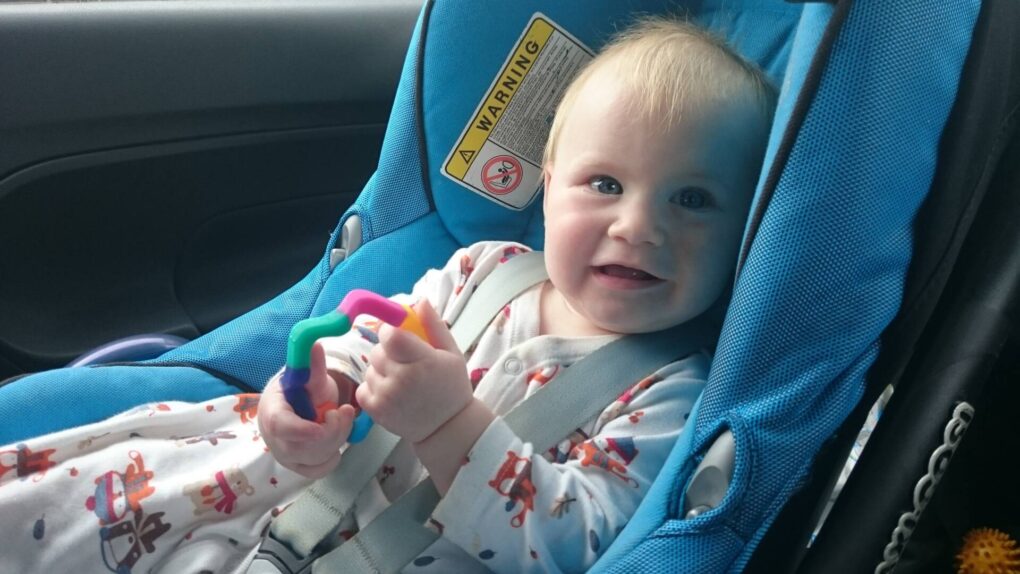
Disclosure: collaborative post
The best way to protect your newborn when they are in your vehicle is by placing them in a car seat. Unfortunately, car crashes can be fatal for children, and a car seat may just save the little one’s life. Besides getting a car seat, you must learn to use it correctly, otherwise, there is not much use of it. The car seat must fit your kid’s size, weight, and age, and also it must fit your car.
The car seat must meet the Federal Motor Vehicle Safety Standard (FMVSS). There will a label that will tell you this information. Before you take your child on his/her first ride, you must learn to install the car seat properly and how to use the harness. Also, make sure you know what time to switch a car seat from 5-point-harness to booster.
If you choose to use a secondhand car seat, make sure it was not in a car crash; otherwise, you shouldn’t be using it. If the car seat has missing parts or doesn’t come with instruction and there no date when it was manufactured, again shouldn’t be using it.
If you are not certain about the seat’s history and it has signs of tear and wear like cracks, then stay away from it. You can always call the seat’s manufacturer to get information on how long that seat is safe to be used. The manufacturer can offer you a replacement part or even a new model if that seat has been recalled. Your baby’s first car seat must be a rear-facing one or a convertible one. Eventually, as the baby grows, you will switch to a forward-facing seat and, lastly, to a booster seat.
The most important things that you should learn before choosing a car seat are the different car seat types.
How many types of car seats are there?
Infant car seats (birth to 22-35 pounds)
These seats are appropriate for newborns and small infants, and when your baby outgrows it you must switch to the next car seat. These seats will protect your baby until he/she reaches up to 16 kilograms. These seats must be installed to face the rear of the vehicle. A newborn or smaller child is less likely to get injured or die when placed in a rear-facing seat. This is because the back of the seat will support the neck, head, and torso in the event of a crash. Experts will tell you that switch from rear-facing to forward-facing seat basing on the child’s size instead of the age. But usually, the child will use the rear-facing seat until age 3-4.
The infant car seats are also convenient because they can also function as chairs, carriers, or even rockers when you are not using them in your car. Most models can detach from the base, leaving the base installed in the car. There are some models that you can click into your stroller and move around. Never put the car seat on a high surface while the baby is still in it. Because the car seat is easy to use doesn’t mean that you should let your child spend too much time in it. This is because it can affect the child’s development of his/her motor and sensory skills due to the limited movement and limited opportunities for stimulation. If you are looking for a car seat for your 1-year-old, here is the best car seat for them at Elitecarseat.
Convertible car seats
The convertible seats can protect your kid from birth up to at least 18 kilograms while rear-facing and up to 30 kilograms while facing forward. Depending on your child’s size and age, these seats can either be rear-facing or forward-facing.
The seat must be rear-facing until the baby reaches the required size and age to convert the seat to forward-facing. You will then just turn it around and convert it to a forward-facing seat. There are models that not only can switch from rear to forward-facing seats but also can become a booster seat by removing the harness.
The convertible seats are not very portable because they are heavy. It is not recommended to use them outside of the car. Because you are basically buying 3 in 1 seat, they are more on the economic side. You can use them for a baby that has outgrown the infant-only seat but yet must be seated in a rear-facing seat.
When you use a convertible seat, make sure the child fits correctly in it. Avoid using one that comes with a tray shield if you are putting a newborn in it. Because the shield is too high for the baby, they can hit their face into it in a car accident event.
Booster car seat (for 20-80 pounds)
These seats will protect children who weigh from 20 – 80 pounds (10 to 36 kilograms). When the child outgrows the rear-facing seat, you must switch to forward-facing with a full harness. Do not switch to a booster seat before the required height and weight required doing so. Some models can even convert to a belt-positioning booster seat.
Thoughts about the airbags
Airbags and safety belts are your best protection from injury and death during a car accident. Yet younger children can get injured or even killed even when the airbag opens while riding in the front seat. This is because the airbags are primarily designed for adults, and they open with huge force to protect an adult person. This force is ok for the adult person, but it can lead to serious neck and head injuries to the small child.
To avoid this from happening, you must never place a rear-facing seat in the front seat of your vehicle. Instead, put the child and his/her car seat in the back seat of the vehicle. But, if you really must place the kid in the front seat of the car, make sure you have pushed the passenger seat as far back as it can go.
It is recommended for children under 13 to ride in the back seat of the vehicle, and just like all the other passengers, they must have their seatbelts buckled. You can install a manual cut-off switch that will temporarily disable the passenger’s side airbag, which allows you to place your child’s booster seat in the front seat. Don’t forget to switch it back on when the child is off the seat.
Thank you for reading - if you enjoyed this content, please consider buying me a coffee here or browse my Amazon wishlist I really appreciate your support and it helps to keep the site running and for my time 🙂