
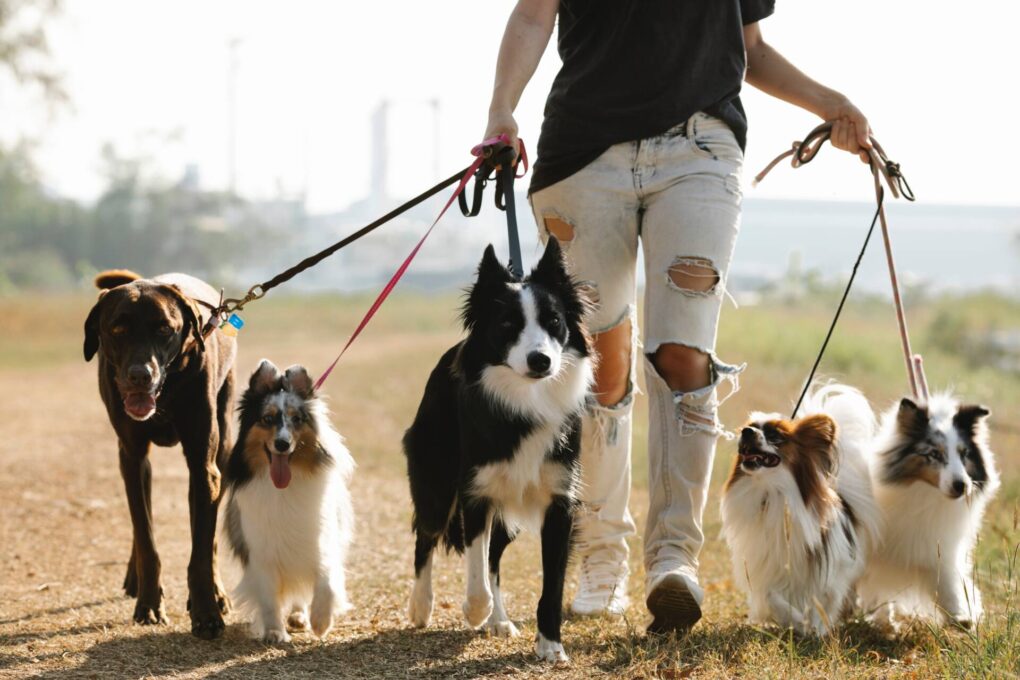
From helping them socialise, to tracking down your Houndini, leashes and collars play an important role in your dog’s life. Choosing the right one is crucial for your pet’s safety and comfort, but with so many options out there (nylon, reinforced webbing, and leather—oh my!), it can be difficult to know where to start.
We’ll run you through the different options, including common fabrics and designs, along with practical tips on how to measure your dog, so you can find the leash, collar, and harness that’s right for your pup.
The importance of choosing the right collars, harnesses, and leashes
Purchasing a leash and collar might seem like a no-brainer, but there’s more to it than walking into your pet store and grabbing one off the rack. Essential to ensuring your dog’s safety and comfort, a well-fitted collar or harness should allow your dog to breathe comfortably, without slipping off or becoming too tight.
Leashes come in various lengths and materials, and it’s important to choose one that fits your dog’s size and strength. By investing in well-fitting, good-quality accessories, you’ll prevent the possibility of injury or escape, and ensure your pup is safe and comfortable ‘round the clock.
Measure up!
Just as every dog has his day, every dog has his own leash size! Measuring is a crucial step when it comes to choosing a leash, collar, and harness to ensure they fit your pet comfortably and securely.
When measuring for a collar, it’s best to use a soft measuring tape (if you don’t have one on hand you could even use a piece of string or ribbon):
- Start by wrapping the tape gently around your dog’s neck where the collar would sit.
- Next, add an extra two inches to the measurement (or use the two-finger rule, where you loosen the tape so you can slip two fingers between the collar and your dog) to ensure the collar isn’t too tight.
- Take note of this measurement—this is the perfect fit for your furry friend!
For a harness, you’ll need to measure both your dog’s neck and chest. Using soft tape:
- Start by measuring their lower neck, just above their shoulders (or beneath where you’d normally put a collar).
- Next, take the tape behind your dog’s front legs, and measure their chest at its widest part, starting from the bottom of the ribcage.
- Now you have the paw-fect measurement for your dog’s harness.
- NOTE: A dog’s weight and shape can affect their harness size, so you may find a small dog might actually require a medium harness, and so on.
While a harness should be snug, it shouldn’t be tight; just like a collar, you should be able to fit two fingers between the harness and your dog.
When it comes to leashes, the most common leash length is six feet (or 182 cm), which gives your dog some room to explore without having too much slack. Often smaller dogs can get away with a four-foot leash, and these can also be good for puppies or any excitable dogs that need some extra guidance, as it helps train them to stay by your side.
Collar vs Harness, which is best?
Whether you choose a collar or a harness comes down to personal preference but there are some crucial differences. Collars are easy to wear and perfect for attaching identification tags, making them a popular choice. They’re also less physically taxing on you when walking your dog (especially if your dog likes to take you on a walk instead!).
On the other hand, harnesses put less pressure on your dog’s neck when being walked. They’re also great for car trips (as dog seatbelt systems are generally designed to attach to a harness) and less likely to slip off. Although it’s important not to leave a harness on for too long as this can lead to irritation.
Ultimately, there is also no reason why you can’t have both, and experts tend to recommend using a collar for day-to-day wear and a harness for walking.
The different types of collars
There are so many different kinds of collars out there, it can be hard to know where to start. The good news is, most dog owners’ needs are covered by a few main options:
- Flat collars are the most common type, and as the name suggests, they sit flat against your pup’s neck and feature a single buckle. Usually made from nylon or leather, they are perfect for everyday use, especially suited to dogs that don’t pull on the leash.
- Head collars (or halter collars) are designed to give owners more control when walking. Designed with a strap that wraps around your dog’s muzzle, they are perfect for dogs that tend to forget they are tethered!
- Martingale collars (or limited slip collars) are perfect for dogs that have a tendency to slip out of flat collars. Commonly used for canines with narrow heads (like greyhounds and whippets).
- Slip collars are similar to martingale collars but use a slightly different mechanism to tighten when your dog pulls. They are often used for training purposes and while they are more effective in this regard, martingale collars are considered gentler on dogs.
Check the materials
Collars and leashes are commonly made of either leather or nylon (though they can also come in cotton, faux leather, or reinforced webbing strap). Whatever you choose, you’ll want something durable and easy to throw in the wash if it gets dirty—like all those glorious mud baths!
And there you have it. Go forth and enjoy the selection of collars, harnesses, and leashes for your pup. Remember to regularly check your fur baby’s collar and harness are fitting well, including keeping an eye on any changes to your dog’s weight and size. With a good quality collar, harness, and leash you’ll ensure plenty of fun (and safe) times ahead with your furry friend.
Disclosure: collaborative post
Thank you for reading - if you enjoyed this content, please consider buying me a coffee here or browse my Amazon wishlist I really appreciate your support and it helps to keep the site running and for my time 🙂