


Disclosure: collaborative post
So you’ve started doing some yoga in lockdown and you like the effects? It’s not surprising when you consider the benefits of yoga have been well documented over the years. There have been several studies now and it’s clear that doing yoga will have a positive impact on your life. How? Here’s a quick round-up of the benefits of regular yoga:
- Improves your flexibility
- Builds muscle strength
- Perfects your posture
- Prevents joint and cartilage breakdown
- Protects your spine
- Betters your bone health
- Increases your blood flow
- Drains your lymphatic system and boosts immune system
- Increases your heart rate
- Decreases your blood pressure
- Regulates your adrenal glands
- Makes you happier
- Creates a foundation for a healthier lifestyle
- Lowers blood sugar
- Strengthens focus
- Improves your balance
- Releases tension
- Improves your sleep
- Aids digestion
- Eases pain
- Inner peace
- Helps keep allergies and viruses at bay
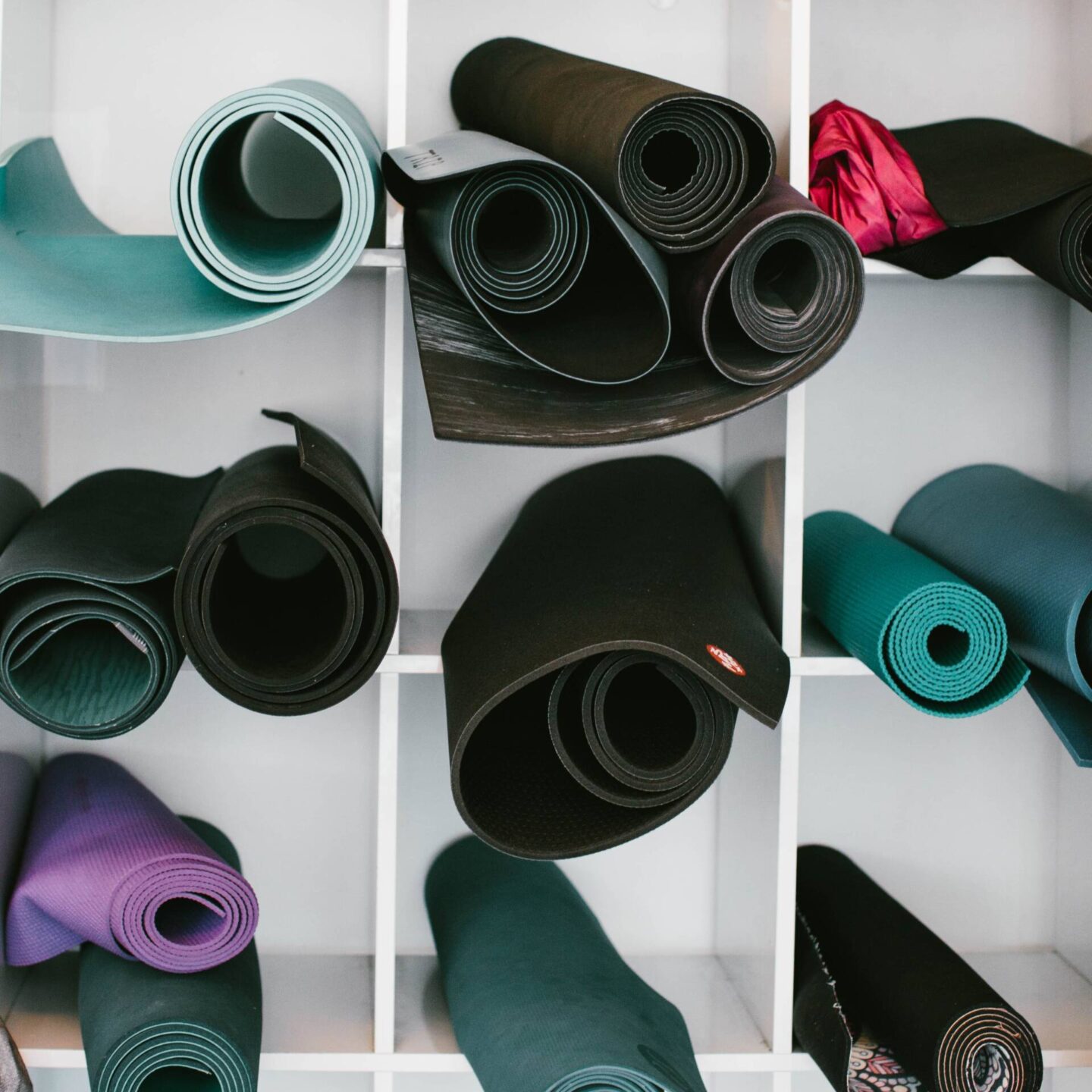
Now we’re doubly sure yoga is for us, we need some basic equipment. Yes, you can put a towel and some cushions on the floor, but it’s not very comfortable or inspiring. Ten years ago, there was only one basic type of yoga mat made of PVC and noted for its stickiness. Your only choice was whether to buy pink or purple. Now, there’s a yoga mat to suit every priority and preference.
Beyond choosing a colour and pattern that suits your style, your yoga mat needs to keep you stable in your poses; it needs to be storable and portable, yet comfy and cushy. You may also want your mat to be environmentally friendly. These aspects of your mat’s personality are all affected by how the mat is made: how thick it is, what it’s made of and its surface texture.
Use this guide to help you find a yoga mat that you can be happy with and one that suits your practice, priorities, lifestyle, values, and budget.
Thickness
The thickness of your yoga mat has a to do with how comfortable it is. If it’s too thin, it’s not comfortable to lie or kneel on and can cause more damage than good. Conversely, the super thick mats can make it harder for you to feel a strong connection to the floor, making you more wobbly in one legged poses.
A standard yoga mat is about 1/8 inch thick, while the thickest are about 1/4 inch. There are also super-thin yoga mats, often billed as “travel yoga mats,” that are a mere 1/16 inch thick. They fold easily and don’t weigh much, making them a cinch to fit in a suitcase. These are more of a non slip mat and won’t provide much cushioning. I prefer a thicker mat because I am sensitive to pressure on my bones and joints when lying down.
If you don’t mind carrying and storing a little more heft for the sake of more cushioning, consider a thicker yoga mat that’s about 1/4 inch thick. If you’re happier with a thinner mat and you need it to fold down smaller, go for a standard mat. If it’s an essential travel item grab the thinnest one.
Material
The material your yoga mat is made of dictates its texture, stickiness, eco-friendliness, and sponginess (how much it yields to pressure), and how it wears over time – you want it to last, right?
Most standard yoga mats are made of PVC, otherwise known as vinyl. Newer, more earth-friendly options include natural and recycled rubber, jute, and organic cotton or natural cotton (which means the fabric is not treated with synthetic finishes during manufacturing). A good compromise is one made of natural rubber with a blended microfiber top. I really love these eye-catching designs:


Style
Here the sky is your limit! You can choose from any colour in the rainbow, or go for a statement yoga mat with a printed photo or design onto it. You can really express yourself, or go with a relaxing scene to inspire and increase your relaxation in the yoga experience.


I hope this guide has helped you choose your perfect yoga mat, let me know what you decide on.